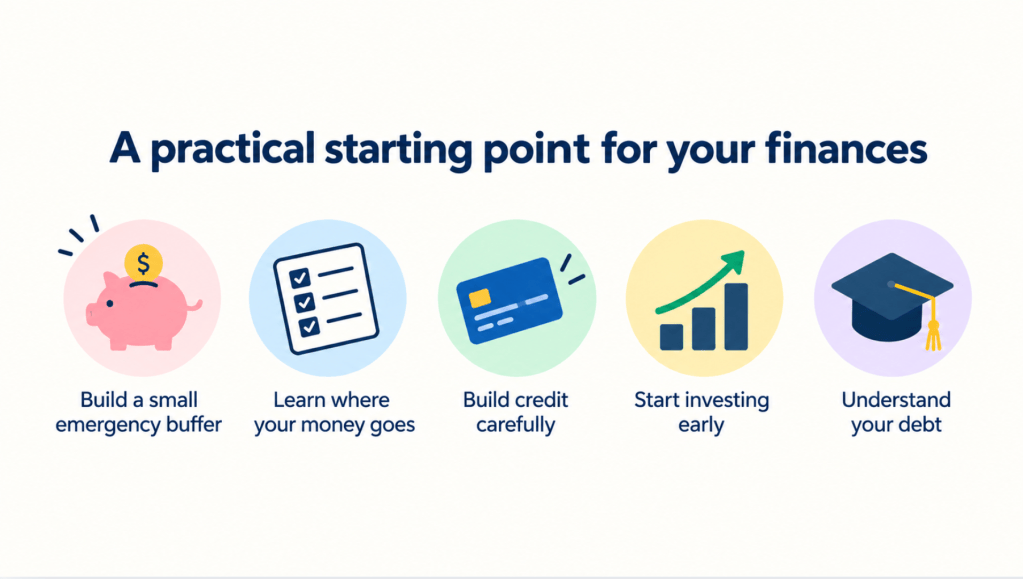
Personal finance can feel way more complicated than it needs to be, especially when you’re a student. You hear about credit scores, TFSAs, student loans and a hundred different money rules, often from people who make it sound like you’re behind if you haven’t figured everything out.
The reality is a lot simpler. Most students don’t need an advanced financial strategy in their early 20s. They need a few important basics working in their favour. These five moves are about building a foundation that makes future money decisions easier.
1. Build a small emergency buffer
You’ve probably heard that you should have three to six months of expenses saved. That can be a useful long-term goal, but for a student it can sound unrealistic.
A better first step is simply having something set aside.
The Financial Consumer Agency of Canada says an emergency fund can help cover unexpected expenses without immediately turning to debt, and recommends starting with an amount you can realistically afford. FCAC identifies three to six months of regular expenses as a longer-term goal.
Your first target might be $300–$500. That could cover a surprise phone repair, an unexpected subscription renewal or a few weeks with fewer work hours. Keep it in a separate savings account and automate a small transfer every payday, even if it’s only $10 or $20.
The goal isn’t to hit a perfect number immediately. It’s to make sure every unexpected expense doesn’t automatically become a credit-card balance.
2. Learn where your money actually goes
You don’t need a colour-coded spreadsheet tracking every drink you buy for the rest of your life, unless that’s your cup of tea.
However, you do need a basic idea of where your money is going.
Look at one month of transactions and group your spending into broad categories like food, transportation, subscriptions, school, entertainment and whatever else you regularly spend money on. Then look for anything that surprises you. You don’t have to cut everything. Just ask yourself whether the spending is actually worth it to you.
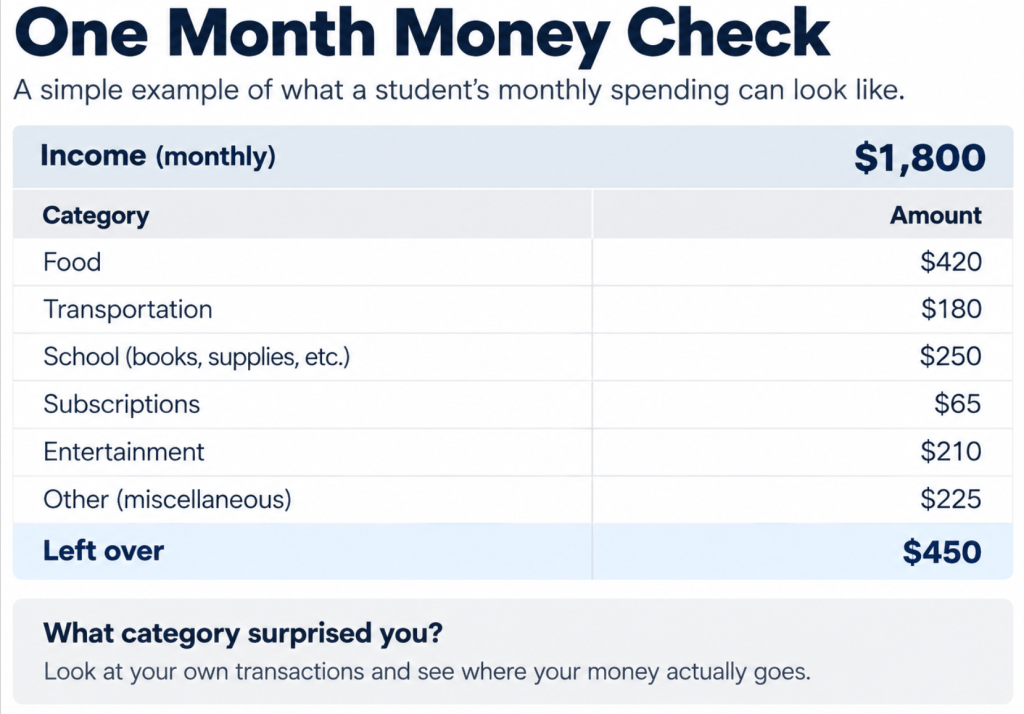
FCAC’s budgeting guidance recommends looking at your income, savings and expenses so you can understand your financial situation.
The point of a budget isn’t to make spending miserable. It’s to make your choices intentional. Once you understand your cash flow, decisions about saving, investing or paying debt become much easier because you actually know what you have available.
3. Build credit carefully
Getting your first credit card can feel like gaining access to extra money.
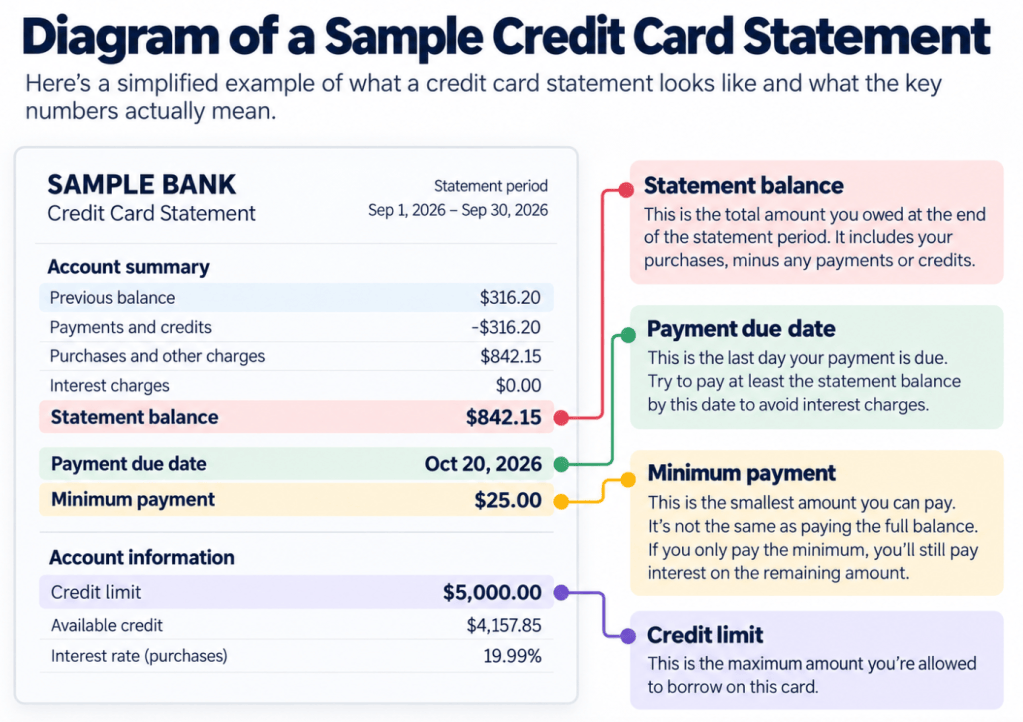
It is not. Your credit limit is the maximum amount a lender is willing to let you borrow. If you start thinking of that limit as money you actually have, credit can get expensive very quickly.
According to FCAC’s credit-score guidance, payment history is the most important factor in your credit score, and FCAC recommends making payments on time and trying to use less than 30% of your available credit.
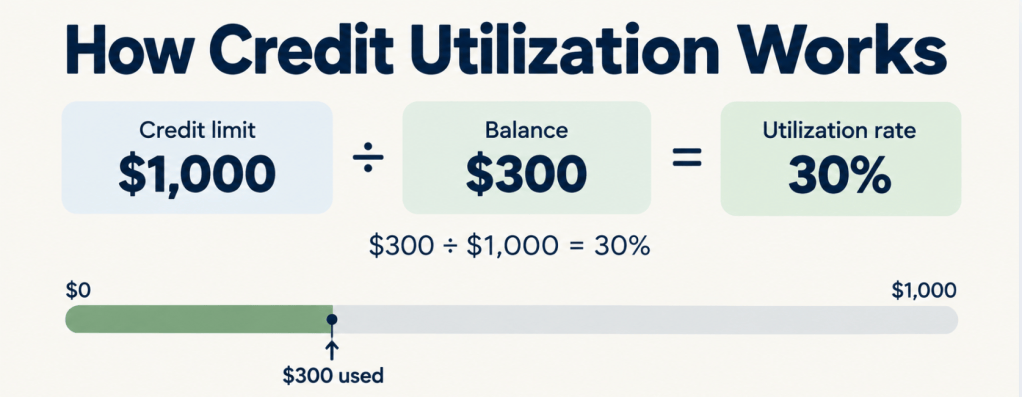
A simple way to build the habit is to put predictable expenses on the card, like your phone bill or a subscription, and pay the balance on time each month. Turn on payment reminders or automatic payments so you don’t miss a due date.
You also don’t need to obsess over every small movement in your score. Building a consistent history matters more than checking it every week.
4. Start investing early, but only when you’re ready
“Start investing as early as possible” is advice you hear everywhere, and there’s truth behind it. Starting earlier gives your money more time to grow and gives you more time to ride through market ups and downs.
However, “start early” doesn’t mean “invest every dollar immediately.”
GetSmarterAboutMoney, an investor-education website operated by the Ontario Securities Commission, notes that starting early doesn’t mean investing money you need for monthly expenses.
Before investing, ask yourself three questions:

If the answer to all three is yes, learning about investment account options and starting with a small amount can make sense.
Canadian students should also understand how a TFSA works. A Tax-Free Savings Account can hold cash and investments, and interest, dividends and capital gains earned inside it are generally tax-free in Canada, even when withdrawn. Canadian residents who are at least 18 and have a valid SIN can generally open one, subject to the applicable rules and contribution limits.limits.
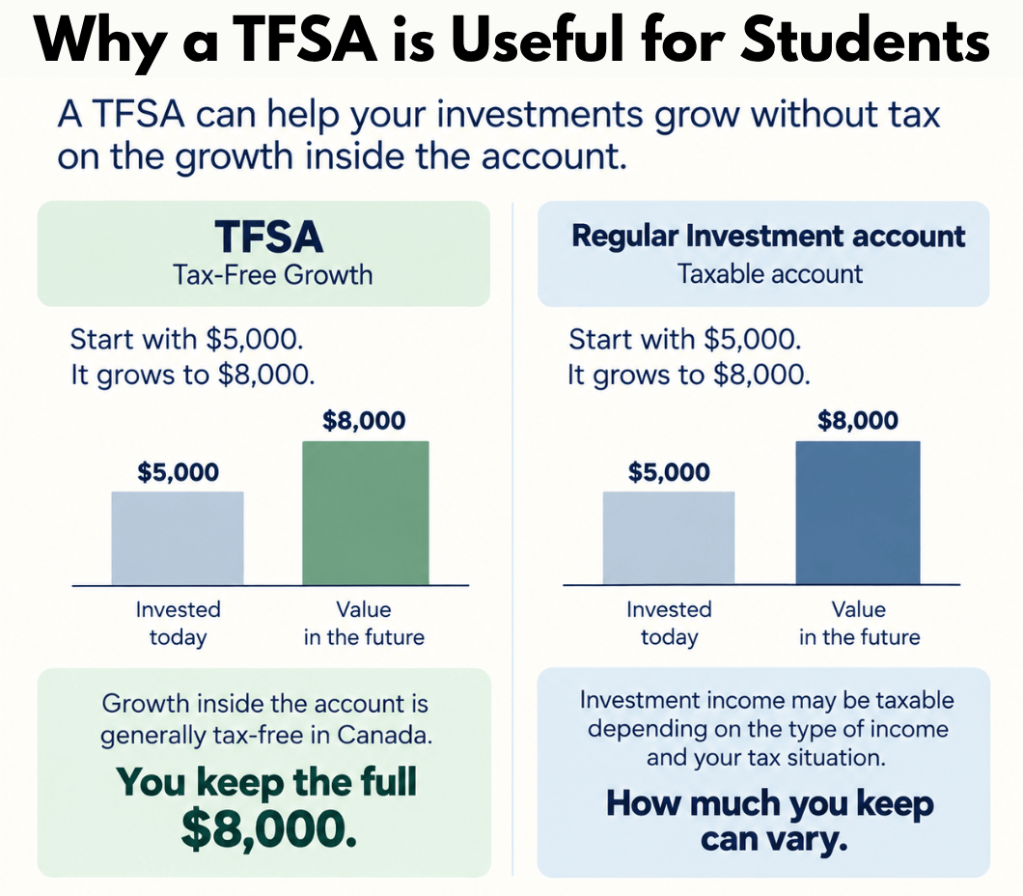
Key takeaway: Learn the basics of investing first, then start small when your finances are ready for it.
5. Understand your debt before ignoring it
Debt can be easy to push aside while you’re still in school because repayment feels like a future problem. However, different kinds of debt can have very different costs and rules.
A federal Canada Student Loan, a provincial student-loan portion, a bank student line of credit and a credit-card balance aren’t the same thing. For example, according to the Government of Canada’s student-loan repayment guidance, the federal government currently charges no interest on Canada Student Loans, while provincial rules may differ.
Make a simple list with four things for every debt: who you owe, the balance, the interest rate and when payments are due. That shows you which debts are costing you the most and which may deserve attention first.
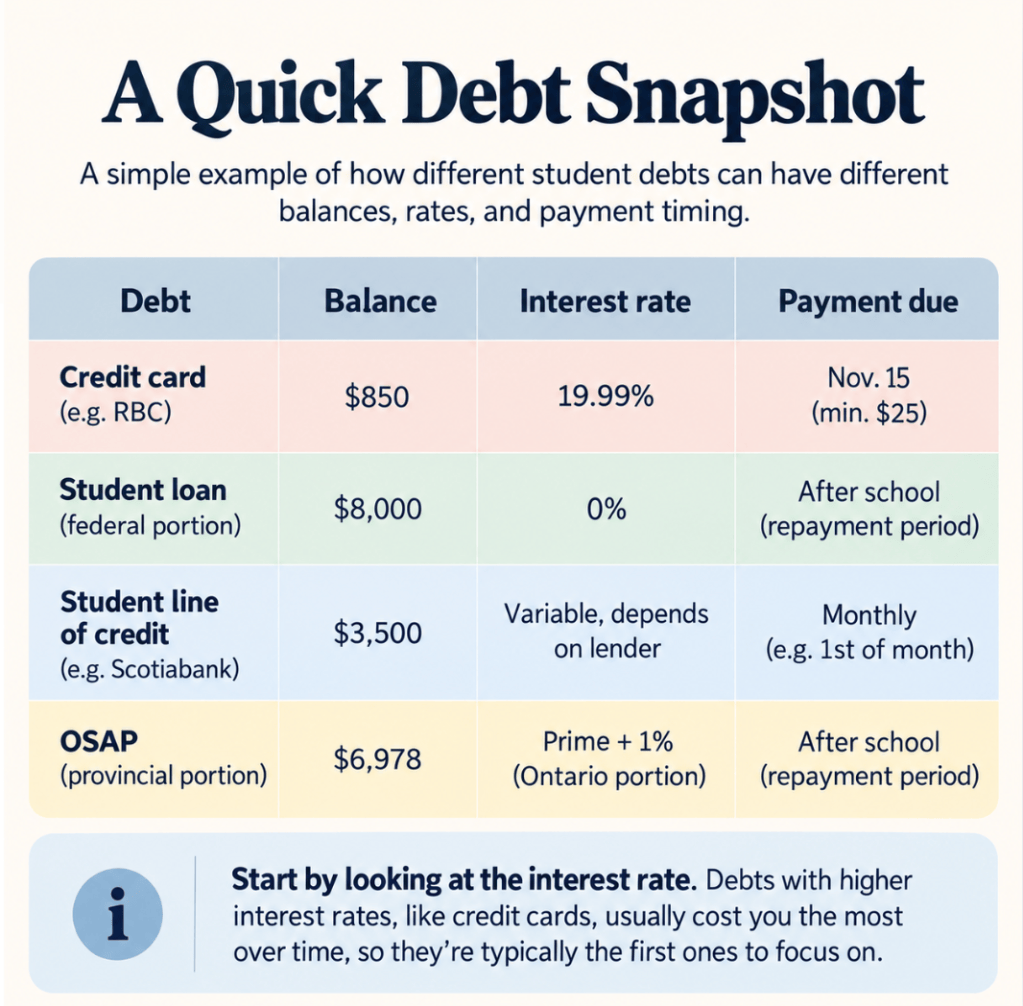
You don’t need to panic and pay everything off tomorrow. You just need to know what you owe and what it’s costing you before deciding what to prioritize.
The big idea
None of these moves are super exciting, and that’s kind of the point. A strong financial foundation usually comes from doing a few boring things consistently: keeping some cash available, knowing where your money goes, using credit carefully, understanding your debt, and investing when you’re ready.
You don’t need to have everything figured out in your early 20s. You just want to make today’s decisions a little easier on your future self.
If you’re new here, learn more about The Student Money Playbook and why I created it.
If you want more straightforward personal-finance guides for Canadian students and young adults, subscribe below!


Leave a Reply