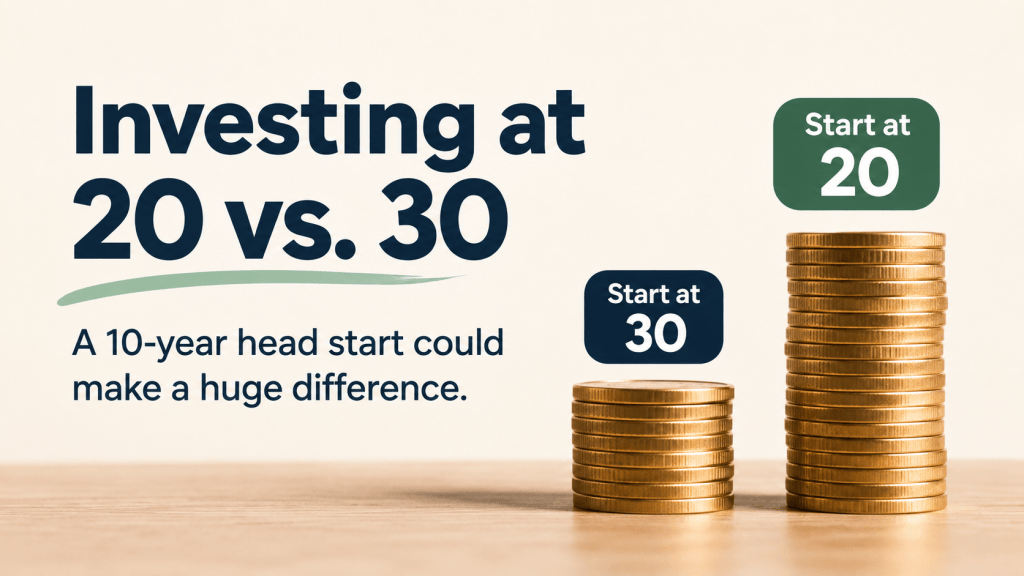
Imagine two people investing $500 every month until they retire at age 65.
The only difference? One starts at age 20, while the other waits until age 30.
By retirement, the early investor has approximately $1.9 million, while the other has around $900,000. That’s a difference of nearly $1 million, even though the earlier investor contributed just $60,000 more (10 years x 12 months x $500).
No secret stock picks, cryptocurrency jackpot, or get-rich-quick scheme.
Just a ten-year head start and the power of compound growth.
These are hypothetical results assuming a constant 7% annual return, not guaranteed market outcomes. However, the math reveals something worth understanding, especially if you’re still in your early twenties.
Two Investors. Same Strategy. Two Very Different Outcomes.
Imagine two fictional investors, Adrian and Ben.
Both start with $0 and invest $500 at the end of every month into the same diversified investment. For this hypothetical example, we’ll assume a constant 7% annual return, compounded monthly, with all returns reinvested.
Adrian starts at 20, investing $500 every month until age 65.
Ben starts at 30, investing the same $500 every month until age 65.
The only difference is when they start.
Here’s how their investment portfolios compare at age 65:
| Adrian | Ben | |
| Starting Age | 20 | 30 |
| Years Investing | 45 | 35 |
| Total Contributions | $270,000 | $210,000 |
| Portfolio at 65 | $1,896,297 | $900,527 |
Hypothetical projections in Canadian dollars. Figures exclude fees and taxes and are not adjusted for inflation.
As you can see, Adrian only contributed $60,000 more over his lifetime, but he ended up with $995,770 more.
Where did all that extra money come from?
By age 30, Adrian has contributed $60,000. Under our hypothetical 7% return, those contributions have already grown to approximately $86,542. On the other hand, Ben, at age 30, is only beginning to invest.
From age 30 onward, Adrian and Ben make exactly the same $500 monthly contributions. Those new contributions produce the same projected growth for both investors. However, Adrian also has that original $86,542 invested from the first ten years.
If Adrian leaves that amount invested for another 35 years at the assumed return, it grows to approximately $995,770 ($1,896,297 – $900,527). That’s the entire difference between the two investors at retirement.
The additional $60,000 Adrian contributed before age 30 had decades longer to generate growth.
This is called compounding. When investment returns remain invested, future growth can build on both your original contributions and earlier gains.
You don’t need to predict tomorrow’s winning stock to understand why time can matter so much.
Want a quick visual explanation of why time makes such a difference? This short video from GetSmarterAboutMoney, an investor education resource from the Ontario Securities Commission, explains how compounding works and why reinvesting returns matters.
To learn more, check out the Canadian Investment Regulatory Organization’s guide to understanding investment returns.
But What If You Don’t Earn 7%?
A 7% annual return isn’t guaranteed. Real investments rise and fall in value. Some years are profitable, and others bring losses.
If we assume a lower annual return of 5%, also compounded monthly, the results would look like this:
| Adrian, starts at 20 | Ben, starts at 30 | |
| Portfolio at 65 | $1,013,219 | $568,046 |
Adrian still finishes ahead, but the gap is now approximately $445,000, not $1 million.
Fees and taxes can also reduce investment growth. Inflation reduces what future dollars can actually buy. For perspective, if inflation averaged 2% annually over 45 years, Adrian’s projected $1.9 million at age 65 would have purchasing power equivalent to roughly $778,000 in age-20 dollars.
That’s why financial projections should be treated as scenarios, not promises.
The lesson isn’t that you’ll automatically become a multi-millionaire. It’s that starting earlier can give your investments significantly more time to grow.
How Can a Canadian Student Start Investing?
1. Learn About Diversified Investing
One approach worth researching is investing in a broadly diversified, low-cost exchange-traded fund, or ETF.
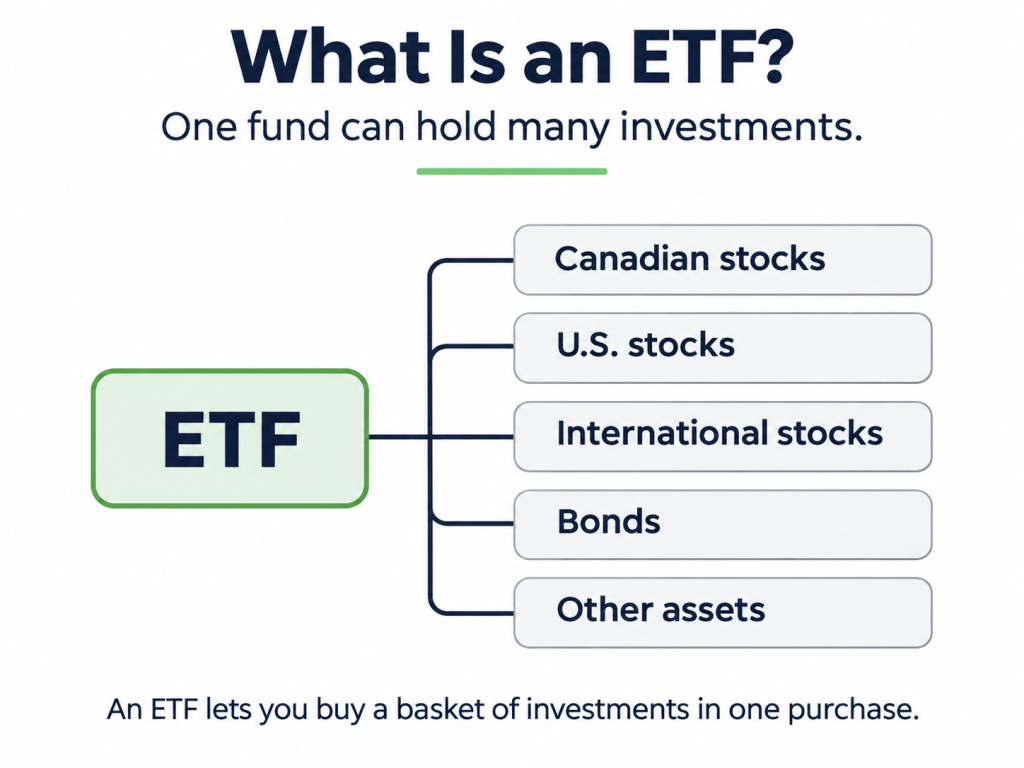
An ETF can hold many different investments in a single fund. Instead of relying on one company’s success, you can potentially invest across a large number of businesses, industries and countries. However, not all ETFs are equally diversified or suitable for every investor.
The Ontario Securities Commission’s guide to ETFs explains how they work, what they can hold, and the risks and fees involved.
2. Understand the TFSA
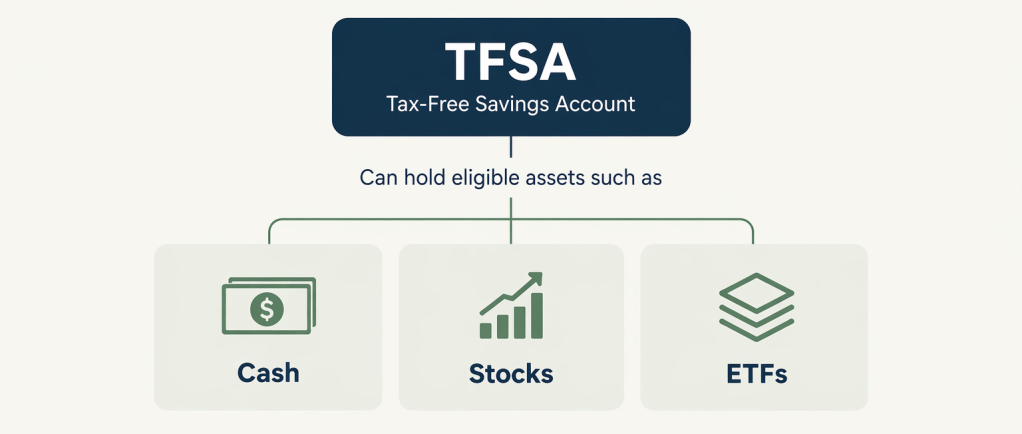
A Tax-Free Savings Account (TFSA) isn’t just somewhere to keep your cash. It can hold investments, including many ETFs. Generally, qualifying investment growth inside a TFSA is tax-free.
But a TFSA is an account, not an investment itself. You still need to choose what to hold inside it.
There’s also a contribution limit. The 2026 annual TFSA dollar limit is $7,000, although your personal available room depends on your history and eligibility.
Before contributing, use the Canada Revenue Agency’s TFSA contribution-room calculator or worksheet to estimate your available room. You can access the online calculator through CRA My Account. Always verify the result against your own contribution and withdrawal records, since CRA information may not include your most recent transactions.
Remember, withdrawing money from your TFSA generally restores that contribution room on January 1 of the following year, not immediately.
3. Start With an Amount That Works for You
You might be thinking, “I’m a student. Where am I supposed to find $500 every month?”
That’s a fair question.
The point of this comparison isn’t that every student should immediately invest $500 every single month. You can begin by determining how much money you won’t need for tuition, emergencies or other monthly expenses. For some students, that might mean investing a smaller amount regularly and increasing it as their income grows.
High-interest debt and essential expenses should come first. The important thing is building a sustainable strategy rather than forcing yourself to invest money you can’t afford to lose access to.
If you’re still building your financial foundation, check out my first article, 5 Money Moves Canadian Students Should Make in Their Early 20s, for other habits worth developing before and alongside investing.
4. Calculate Your Own Investing Future
Want to see how starting at 19, 22 or 25 could change the result? Try the Ontario Securities Commission’s free Compound Interest Calculator. Enter your starting amount, monthly contribution, hypothetical return and time horizon.
Then change one variable at a time.
Try starting ten years later. Try contributing more. Compare a 5% assumption with 7%. Understanding what changes the results is far more useful than memorizing somebody else’s millionaire projection.
The Bottom Line:
Becoming a millionaire isn’t easy or guaranteed. It takes money, time, consistency and the ability to handle investment risk.
But the principles of long-term investing don’t need to be complicated.
If you’re young, one of your biggest advantages is time. You can’t get it back once it’s gone, so the earlier you understand investing and build a sustainable strategy, the more time your money has to potentially grow.
Understand your options, start when it makes sense for your situation, and give your investments as much time to grow as you can.
For more personal finance fundamentals, read my earlier guide, 5 Money Moves Every Canadian Student Should Make in Their Early 20s.
Want more practical money tips? Subscribe to The Student Money Playbook for more financial guides designed for Canadian students.
Disclaimer: This article is for educational purposes only and is not personalized financial advice. All investment projections are hypothetical and assume constant annual returns compounded monthly, end-of-month contributions, reinvested returns, and no fees or taxes. Actual returns vary, and losses are possible.


Leave a Reply